By Cherry Ann Maneja, Customer Relations Representative, Hawryluk Legal Advisors. Last reviewed: 8 October 2026.
Opening a Thai bank account used to take a passport and twenty minutes. In 2026 it takes the right visa, the right paperwork and, often, an appointment. Thai banks have tightened their rules for foreigners, and tourist and Destination Thailand Visa (DTV) holders are now routinely turned away. Thailand Privilege (formerly Thailand Elite) members are in a much stronger position. The membership card and a certified letter from the program are accepted at Thailand’s major banks, and member services can help book the appointment.
This guide brings together everything Privilege members need to know: which banks to use, the documents each one asks for, fees and minimum balances, foreign currency accounts, and how to avoid the most common delays.
Key points
- Thailand Privilege members can open Thai baht and foreign currency (FCD) accounts at Siam Commercial Bank (SCB), Kasikornbank (KBank) and Bangkok Bank, among others.
- Bring your passport with the Privilege visa, your membership card, the certified membership letter, a Thai mobile number and a Thai residential address.
- Expect a minimum balance of about THB 2,000 and a dormancy fee if the account is inactive for 12 months.
- Foreign currency accounts have different rules at each bank, from no minimum at SCB to USD 5,000 at KBank.
- Requirements change often and can differ between branches. Confirm with the bank before your visit.
Why you need a Thai bank account
If you plan to spend more than a few months a year in Thailand, a local account quickly pays for itself:
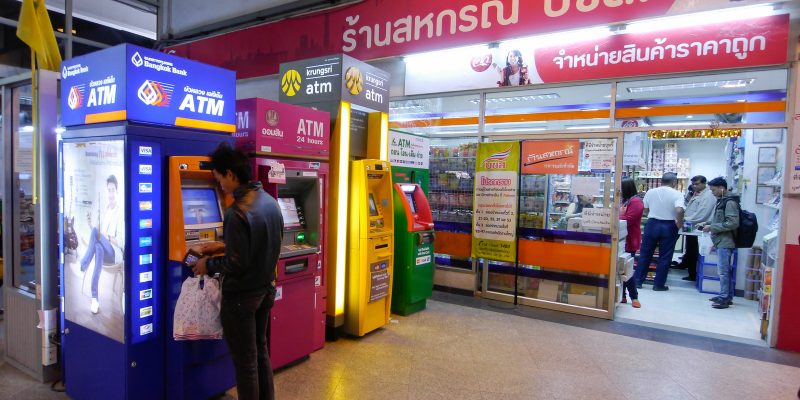
- Lower costs. Withdrawing from a foreign card at a Thai ATM usually carries a Thai bank fee of THB 220 or more per withdrawal, plus your home bank’s charges and exchange margin. A local account avoids both.
- Everyday payments. Rent, utilities, condominium fees, school fees and many shops expect a Thai bank transfer or a PromptPay QR payment.
- Predictable budgeting. Moving funds into baht in larger, planned transfers protects you from small, repeated exchange losses.
- Property and long-term plans. Buying a condominium, paying a lease deposit or setting up a business all go more smoothly with an established Thai account.
Why opening an account is harder in 2026
Thai authorities have spent the past two years cracking down on “mule accounts”: bank accounts opened in a foreigner’s name and then handed to scam, gambling or money-laundering networks. In response, banks now apply much stricter know-your-customer (KYC) checks to every foreign applicant. In practice:
- Tourist visas, visa-exempt entries and visas on arrival are generally no longer accepted for new personal accounts.
- DTV holders are frequently refused, and some existing DTV accounts have been reviewed or restricted. See our article on why tourist and DTV visa holders cannot open a Thai bank account.
- Long-stay visas, including the Thailand Privilege visa and the Long-Term Resident (LTR) visa, remain the most reliable route.
- Banks ask more questions about the purpose of the account and the source of your funds, and branch managers have discretion to approve, delay or decline.
From July 2025, SCB, Kasikornbank and Bangkok Bank also introduced updated procedures for Privilege members specifically, with more documentation and longer verification times. Preparing everything in advance is now the single biggest factor in a smooth visit.
Which banks work with Thailand Privilege members?
- Siam Commercial Bank (SCB). Signed a partnership with Thailand Privilege Card Co., Ltd. in November 2024 covering baht and foreign currency accounts, access to relationship managers, and the SCB EASY app.
- Kasikornbank (KBank). Accepts Privilege members at its branches and offers foreign currency accounts in 11 currencies, available at selected FCD service branches.
- Bangkok Bank. Opens baht and FCD accounts for members and has the widest network of branches experienced with foreign customers.
- LH Bank. Has a separate partnership with Thailand Privilege offering selected remittance-fee benefits to qualifying cardholders.
Experience varies by branch. Branches in central Bangkok, Phuket and Pattaya that regularly serve foreign customers tend to be the most familiar with Privilege documents.
Documents you will need
Every bank asks for the core documents below. Bring originals and a set of photocopies.
- Passport with your Thailand Privilege visa (Privilege Entry or Special Entry visa) and your latest entry stamp. Banks generally want at least six months of passport validity.
- Thailand Privilege membership card.
- Certified membership letter issued by Thailand Privilege for bank account opening. Request it through your Member Contact Center before your appointment.
- Thai mobile number, ideally registered in your own name, for one-time passwords and mobile banking.
- Thai residential address (not a hotel or business address), supported by a lease, ownership documents or a utility bill where the bank asks for it.
Each bank then adds its own requirements. This is the checklist the three main banks applied from July 2025:
| Document | SCB | Kasikornbank | Bangkok Bank |
|---|---|---|---|
| Passport with Thailand Privilege visa | ✓ | ✓ | ✓ |
| Membership card and certified letter | ✓ | ✓ | ✓ |
| Thai mobile number | ✓ | ✓ | ✓ |
| Thai residential address (not a hotel or business) | ✓ | ✓ | ✓ |
| Driving licence or national ID from your home country | ✓ | – | – |
| Lease, ownership documents or owner’s consent letter | – | ✓ | – |
| Utility bill (electricity or water) | – | – | ✓ |
| Home-country tax identification number (TIN) | – | ✓ | ✓ |
Even where a document is not on a bank’s list, the officer may still ask why you need the account. A short, clear answer, such as paying rent and living expenses while living in Thailand on a Privilege membership, helps.
Extra documents if your income or business is overseas
If your main income comes from a business registered outside Thailand, Kasikornbank in particular may ask for:
- Recent personal bank statements, translated and certified in Thailand
- Your company registration certificate
- Proof of corporate income tax filing
Nationalities that may face additional checks
Applicants holding passports from Iran, North Korea, Myanmar, Russia or Belarus may be asked for further supporting documents at the bank’s discretion. Allow extra time and bring evidence of your source of funds.
How to open your account, step by step
- Request your certified letter. Ask the Thailand Privilege Member Contact Center for the bank account-opening letter, and tell them which bank you plan to use.
- Book an appointment. Member services can arrange the visit. Some banks and branches ask for at least three working days’ notice, especially if you do not yet hold your physical membership card.
- Get a Thai SIM and confirm your address. Have your mobile number active and your lease or address documents ready before the appointment.
- Attend in person. Accounts cannot be opened online for new foreign customers. The officer will verify your identity, ask about the purpose of the account and may ask about your source of funds.
- Activate your debit card and mobile banking. If approved, the account is usually opened the same day. Mobile banking activation is at the branch’s discretion, so ask for it during the appointment.
Minimum deposits, balances and fees
These were the standard terms for Thai baht savings accounts at the three main banks for Privilege members from July 2025:
| Term | SCB | Kasikornbank | Bangkok Bank |
|---|---|---|---|
| Minimum initial deposit | THB 500 | THB 500 | None stated |
| Minimum balance | THB 2,000 | THB 2,000 | THB 2,000 |
| Dormancy fee | THB 50/month after 12 months with no activity and a balance of THB 2,000 or less | THB 50/month after 12 months with no activity and a balance of THB 2,000 or less | Not stated |
To avoid fees, keep at least THB 2,000 in the account and make at least one transaction every 12 months. A small transfer or deposit is enough.
Foreign currency deposit (FCD) accounts
An FCD account lets you hold US dollars, euros, pounds and other currencies in Thailand, which is useful if you receive income or a pension in foreign currency or plan a large purchase such as a condominium. The rules differ significantly by bank:
| Requirement | SCB | Kasikornbank | Bangkok Bank |
|---|---|---|---|
| Minimum initial deposit | No minimum | USD 5,000 or equivalent | USD 1,000 or equivalent (non-resident FCD savings) |
| Other conditions | None stated | Available at selected FCD service branches; 11 currencies | Members may need to hold a Thai baht account with the bank for at least 3 months and a lease of at least one year; USD 10/month fee if the average balance falls below USD 250 |
Bangkok Bank’s current non-resident FCD terms are published on its FCD account page. Withdrawal and transfer fees on FCD accounts can be significant, so compare them before moving large sums.
Debit cards, credit cards and mobile banking
- Debit cards are normally issued when the account is opened, for a small annual fee that varies by card type.
- Credit cards are harder for foreigners to obtain. Banks commonly require a fixed deposit held as security; Bangkok Bank, for example, has previously required a fixed deposit of THB 50,000 from members applying for a credit card.
- Mobile banking apps such as SCB EASY, K PLUS and Bangkok Bank Mobile Banking make PromptPay and QR payments simple. Activation for foreigners is approved branch by branch, so request it at your appointment.
Tax and reporting points to know
Opening a Thai account does not by itself make you a Thai tax resident, but how long you stay and what you bring into Thailand can matter:
- If you spend 180 days or more in Thailand in a calendar year, you are a Thai tax resident for that year.
- Foreign income earned on or after 1 January 2024 is assessable if a Thai tax resident brings it into Thailand, in any later year. Income earned before 2024 is generally not caught by this rule. Read our guide to Thailand’s foreign income and remittance tax rules before planning large transfers.
- Banks ask for your tax residency and home-country tax identification number for international reporting, including FATCA for US persons.
The Thailand Privilege visa does not provide a tax exemption. If you expect to remit significant funds, take advice on how and when to bring money in.
Tips for a smooth account opening
- Prepare early. Gather your documents before you travel, including English or Thai translations of anything in another language.
- Use member services. The Thailand Privilege Elite Personal Liaison team can help arrange appointments and handle official paperwork.
- Keep your address consistent. The address on your lease, utility bill and bank forms should match. Ask your landlord to file your TM30 notification, as some branches ask for it.
- Bring proof of funds. A recent statement from your home bank answers source-of-funds questions quickly.
- Keep the account active. One transaction a year and a balance above THB 2,000 avoids dormancy fees and closure.
How Hawryluk Legal Advisors can help
As an officially appointed General Sales and Services Agent (GSSA) for Thailand Privilege Card Co., Ltd. since 2014, and a licensed law firm, we guide members from application through to settling in, including banking, leases, property and tax questions. If you are not yet a member, start with our complete Thailand Elite Visa guide or compare the membership packages.
Book a free 15-minute consultation →
Frequently asked questions
Can I open a Thai bank account with the Thailand Privilege visa?
Yes. The Thailand Privilege visa is one of the most widely accepted long-stay visas for opening a personal bank account. Bring your passport with the visa, your membership card, the certified membership letter, a Thai mobile number and proof of a Thai residential address.
Which bank is best for Thailand Privilege members?
SCB, Kasikornbank and Bangkok Bank all accept Privilege members. SCB has a formal partnership with Thailand Privilege and no minimum deposit on foreign currency accounts. Kasikornbank and Bangkok Bank have large branch networks and long experience with foreign customers. The best choice depends on where you live and whether you need a foreign currency account.
Can I open an account before I receive my physical membership card?
Often, yes, using the membership certificate letter. Some banks ask you to book at least three working days in advance in this case. Your Member Contact Center can confirm the current process.
Can I open a Thai bank account online?
Not as a new foreign customer. You must attend a branch in person for identity verification. Once the account is open, you can usually activate mobile banking.
How much money do I need to open an account?
For a Thai baht savings account, typically THB 500 to THB 2,000. Keep at least THB 2,000 in the account to avoid fees. Foreign currency accounts range from no minimum at SCB to USD 5,000 at Kasikornbank.
Can my spouse or family members open accounts too?
Yes, if they hold their own Thailand Privilege membership, they can open accounts in their own names with the same documents. Family members can be added on the Platinum, Diamond and Reserve tiers.
Bank requirements, fees and minimum balances in this guide reflect published bank terms and member guidance current at the time of review. They change frequently and can vary between branches. Always confirm directly with your chosen bank or the Thailand Privilege Member Contact Center before your appointment. This article is general information, not legal or financial advice.